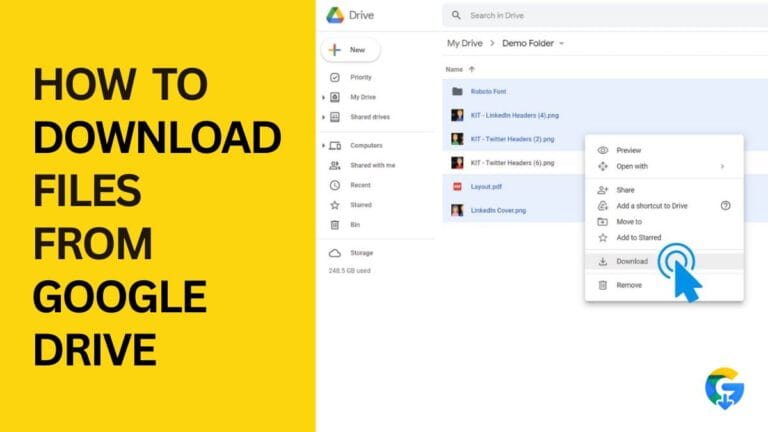
Title: Unlocking the Power of Google Drive Direct Download Links – A Step‑by‑Step Guide
—
Introduction: Why a Direct Download Link Matters
Imagine you’ve just finished editing a high‑resolution video, a PDF guide, or a software installer and you need to share it with a client, a class, or a worldwide audience. You could send the file as an attachment, but size limits and email filters quickly become a roadblock. You could give them a regular Google Drive share link, but the recipient has to click “Open with Google Docs” or “Add to My Drive” before they can actually download the file.
That extra click (or two) can feel like a friction point, especially when you’re trying to provide a seamless user experience. This is where a Google Drive direct download link shines. A direct link bypasses the preview page and forces the browser to start the download instantly—just like a traditional file‑hosting service. In this post, we’ll demystify how direct download links work, walk you through multiple methods to create them, explore common pitfalls, and share best practices for security and SEO. By the end, you’ll be able to turn any Google Drive file into a one‑click download that works on desktop, mobile, and even within automated scripts.
—
1. Understanding the Anatomy of a Google Drive Link
Before you can convert a regular sharing URL into a direct download link, you need to know what each part of the URL does.
| Component | Example | What It Does |
|———–|———|————–|
| File ID | `https://drive.google.com/file/d/1A2b3C4d5E6F7g8h9I0j/view` → `1A2b3C4d5E6F7g8h9I0j` | A unique 33‑character string that Google Drive assigns to every file. |
| View Mode | `/view` | Opens the Google Drive preview page. |
| Export/Download Parameter | `?export=download` | Instructs Google Drive to serve the file as an attachment, triggering a download. |
A standard sharing link looks like this:
“`
https://drive.google.com/file/d/FILE_ID/view?usp=sharing
“`
A direct download link swaps the `/view` endpoint for `/uc` (short for “upload controller”) and appends `?export=download`:
“`
https://drive.google.com/uc?export=download&id=FILE_ID
“`
That tiny change is the key to a frictionless download experience.
—
2. Creating Direct Download Links – Three Proven Methods
2.1 Manual Conversion (Quick & Dirty)
If you only need a handful of links, the fastest way is to edit the URL yourself.
1. Copy the share link from Google Drive (right‑click → Get link).
2. Extract the File ID – it’s the string between `/d/` and the next slash (`/`).
3. Paste it into the template:
“`
https://drive.google.com/uc?export=download&id=YOURFILEID
“`
4. Test the link in an incognito window to confirm it triggers an immediate download.
Pros: No extra tools, instant results.
Cons: Manual, error‑prone for large batches, no analytics.
2.2 Using Google Apps Script – Automate at Scale
For marketers, educators, or developers who need dozens or hundreds of direct links, a short Apps Script can generate them automatically.
“`javascript
function generateDirectLinks() {
const folderId = ‘YOURFOLDERID’; // optional: limit to a folder
const folder = DriveApp.getFolderById(folderId);
const files = folder.getFiles();
const output = [];
while (files.hasNext()) {
const file = files.next();
const id = file.getId();
const name = file.getName();
const directLink = `https://drive.google.com/uc?export=download&id=${id}`;
output.push([name, directLink]);
}
// Write to a new Google Sheet for easy copy‑paste
const ss = SpreadsheetApp.create(‘Direct Download Links’);
ss.getActiveSheet().getRange(1, 1, output.length, 2).setValues(output);
}
“`
How to use:
1. Open script.google.com, create a new project, paste the code.
2. Replace `YOURFOLDERID` with the ID of the folder containing the files you want to share.
3. Run `generateDirectLinks()` and authorize the script.
4. Open the newly created Google Sheet to copy your ready‑to‑use direct download URLs.
Pros: Batch processing, centralized list, can be scheduled.
Cons: Requires a bit of scripting knowledge, limited to files you own or have edit rights to.
2.3 Third‑Party Tools & Browser Extensions
If you prefer a UI‑driven approach, several reputable tools can convert links on the fly:
| Tool | Platform | How It Works |
|——|———-|————–|
| Drive Direct Link Generator (web) | Any browser | Paste a share link, click “Generate”, copy the result. |
| Google Drive Direct Link (Chrome extension) | Chrome/Edge | Adds a “Copy Direct Link” button to the Drive file context menu. |
| rclone (CLI) | Windows/macOS/Linux | Use `rclone link` with the `–drive-direct-link` flag for bulk operations. |
When choosing a third‑party solution, verify that it respects your privacy (no data is stored on external servers) and that the generated URLs follow the official `uc?export=download` format.
—
3. Handling Large Files & Quota Limits
Google Drive imposes daily bandwidth limits (approximately 15 GB per file for most accounts). When a file exceeds the quota, the direct download link will show a “Sorry, you can’t view or download this file at this time” error.
3.1 Mitigation Strategies
| Strategy | Description |
|———-|————-|
| Split the file | Use a compression tool (e.g., 7‑Zip) to split a 2 GB video into 4 × 500 MB parts. Share each part with its own direct link. |
| Use a Google Workspace account | Business and Education accounts have higher quota thresholds and can request increased limits from Google Support. |
| Leverage a CDN | For high‑traffic public downloads, consider moving the file to a content delivery network (Cloudflare R2, Amazon S3) after the initial Google Drive sharing. |
| Rotate links | Generate a fresh direct link every 24 hours (using Apps Script) and update the download button on your site. |
3.2 Monitoring Usage
Google Drive does not provide built‑in download analytics. However, you can combine the direct link with a URL shortener that offers click tracking (e.g., Bitly, Rebrandly). By shortening `https://drive.google.com/uc?export=download&id=FILE_ID` you gain insight into how many users actually click the link, which helps you anticipate quota exhaustion before it happens.
—
4. Securing Your Direct Download Links
A direct download link is essentially a public key to a file. If you share it indiscriminately, anyone with the URL can download the content, even if they’re not in your Google Drive sharing list.
4.1 Permission Settings
1. Set the file to “Anyone with the link” – required for direct download to work without authentication.
2. Restrict editing – ensure the permission is set to Viewer only.
3. Expiration dates – Google Workspace admins can set link expiration dates, automatically revoking access after a set period.
4.2 Obfuscation Techniques
While security through obscurity isn’t a replacement for proper permissions, you can add a layer of deterrence:
- Add a query string: `https://drive.google.com/uc?export=download&id=FILE_ID&token=abc123` (the extra parameter is ignored by Google but makes the URL look less predictable).
- Use a redirect page: Create a lightweight HTML page on your domain that redirects to the direct link after a short delay. This allows you to log server‑side hits and implement CAPTCHA if needed.
- Use the `download` attribute to hint browsers to save the file instead of opening it.
- Add `rel=”noopener noreferrer”` for security.
- Direct download links (`https://drive.google.com/uc?export=download&id=FILE_ID`) eliminate the extra preview step, delivering a smoother user experience.
- You can generate them manually, via Google Apps Script, or with trusted third‑party tools—choose the method that matches your volume and technical comfort.
- Quota limits can interrupt large‑file downloads; mitigate by splitting files, using a Workspace account, rotating links, or moving high‑traffic assets to a CDN.
- Security is paramount: set sharing to “Anyone with the link” viewer only, consider link expiration, and use redirects or tokenized URLs for added protection.
- From an SEO perspective, direct links improve page speed, reduce friction, and can be enhanced with structured data for rich snippets.
4.3 Legal & Compliance Considerations
If you’re sharing copyrighted material, personal data, or regulated content (HIPAA, GDPR), always verify that the direct download method complies with your organization’s policies. Remember that “anyone with the link” is effectively public; for sensitive files, consider using Google Drive’s Advanced sharing (specific email addresses, two‑step verification) instead of a direct link.
—
5. SEO Benefits & Best Practices for Embedding Direct Links
5.1 Why Direct Links Matter for SEO
When you embed a downloadable resource (e.g., a whitepaper) on a landing page, a direct download link improves user experience metrics—lower bounce rates, higher dwell time, and faster page load—all of which are positive signals for search engines. Moreover, a clean URL (`uc?export=download&id=…`) is easier for crawlers to interpret than a long Google Drive preview link.
5.2 Implementing on WordPress & Static Sites
WordPress (Block Editor):
“`html
<a href="https://drive.google.com/uc?export=download&id=YOURFILEID”
class=”button primary”
download>Download Our Free eBook
“`
Static HTML (e.g., Jekyll, Hugo):
“`html
<a href="{{ site.baseurl }}/assets/downloads/yourfile.pdf"
target=”_blank”
rel=”noopener”>Download PDF
“`
Then set up a server‑side redirect (via `.htaccess` or Netlify `_redirects`) that points the friendly URL to the Google Drive direct link. This keeps your markup tidy while still leveraging Google’s storage.
5.3 Structured Data & Rich Snippets
Google supports the `SoftwareApplication` and `CreativeWork` schema types with a `downloadUrl` property. Adding JSON‑LD to your page can make the download appear as a rich result:
“`json
{
“@context”: “https://schema.org”,
“@type”: “CreativeWork”,
“name”: “Ultimate SEO Guide 2024”,
“description”: “A comprehensive PDF covering on‑page and off‑page SEO tactics.”,
“downloadUrl”: “https://drive.google.com/uc?export=download&id=FILE_ID”,
“encodingFormat”: “application/pdf”
}
“`
This tells search engines exactly where the file lives, potentially boosting visibility in “download” queries.
—
Conclusion: Key Takeaways
By mastering the creation and management of Google Drive direct download links, you’ll empower your audience to access your content instantly, keep your bandwidth in check, and even give your site a modest SEO boost. Ready to put the theory into practice? Grab that file ID, swap out the endpoint, and watch the clicks turn into downloads—smoothly, securely, and at scale. Happy sharing!