Title: How to Create a Google Drive Direct Download Link – A Step‑by‑Step Guide (2024)
—
Introduction: Why Direct Download Links Matter
Ever tried to share a large PDF, software installer, or high‑resolution video from Google Drive, only to watch your recipient wrestle with the default preview screen, “Add to Drive” prompts, or a dreaded “File cannot be scanned for viruses” warning? You’re not alone.
A direct download link bypasses the Google Drive UI and sends the file straight to the user’s browser, just like a traditional file‑hosting service. This tiny tweak can:
- Speed up downloads – no extra clicks, no extra ads.
- Improve user experience – ideal for software releases, e‑books, or classroom resources.
- Boost SEO – search engines love clean, crawlable URLs that point directly to downloadable content.
- Append `&confirm=t` to the direct link. This parameter tells Google to skip the scan warning and start the download immediately. Example:
- Use a call‑to‑action button with clear text like “Download the Free e‑Book (PDF, 12 MB)”.
- Add a brief disclaimer: “If the download doesn’t start, click here.” linking to the same URL – this covers browsers that block automatic downloads.
In this guide we’ll walk through everything you need to know about creating, customizing, and safely sharing Google Drive direct download links in 2024. Grab your browser, a Google account, and let’s get downloading!
—
1. Understanding Google Drive’s Link Types
Before you start generating a direct link, it helps to know the three primary URL formats Google Drive provides:
| Link Type | Typical URL Example | What It Does |
|———–|———————-|————–|
| Shareable link | `https://drive.google.com/file/d/1A2b3C4d5E6F7g8H9I/view?usp=sharing` | Opens the file in Google’s preview UI. Users can view, comment, or add to their Drive. |
| Export link | `https://docs.google.com/uc?export=download&id=1A2b3C4d5E6F7g8H9I` | Forces a download for Google Docs, Sheets, Slides, etc. |
| Direct download link | `https://drive.google.com/uc?export=download&id=1A2b3C4d5E6F7g8H9I` | Bypasses the preview and starts the file transfer instantly. |
The key difference lies in the query parameter `export=download`. Adding this tells Google’s backend to return the raw file instead of the HTML preview page. The rest of the article shows how to extract the file ID and build that link correctly.
—
2. Step‑by‑Step: Generating a Direct Download Link
2.1. Locate the File ID
Every file stored in Google Drive has a unique file ID – a string of letters and numbers that appears in the URL after `/d/`.
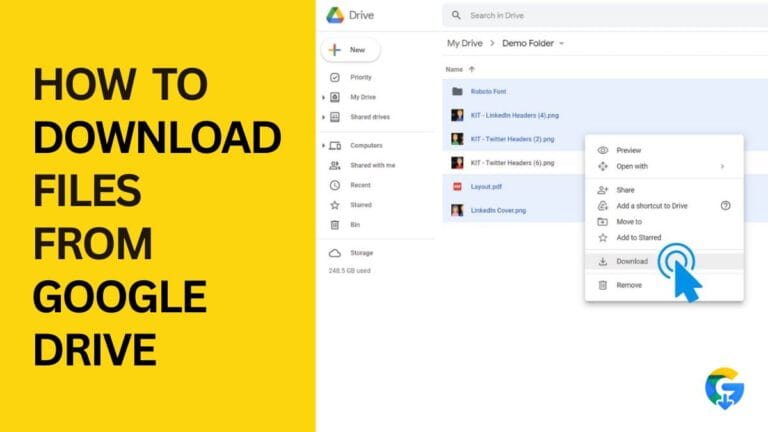
1. Open Google Drive and right‑click the file you want to share.
2. Choose “Get link.”
3. In the pop‑up, click “Copy link.” The URL will look like:
“`
https://drive.google.com/file/d/1A2b3C4d5E6F7g8H9I/view?usp=sharing
“`
4. The file ID is the part between `/d/` and `/view` – in this case `1A2b3C4d5E6F7g8H9I`.
2.2. Build the Direct Download URL
Plug the ID into the direct‑download template:
“`
https://drive.google.com/uc?export=download&id=FILE_ID
“`
Replace `FILE_ID` with the string you copied:
“`
https://drive.google.com/uc?export=download&id=1A2b3C4d5E6F7g8H9I
“`
2.3. Test the Link
Open a private/incognito browser window and paste the URL. If the download starts automatically, you’ve succeeded! If you see a “Quota exceeded” or “Virus scan failed” message, the file may be too large or heavily accessed – we’ll cover work‑arounds later.
2.4. Optional: Add a Custom Filename
Google Drive respects the `filename` parameter when you append it to the URL:
“`
https://drive.google.com/uc?export=download&id=1A2b3C4d5E6F7g8H9I&filename=MyReport.pdf
“`
This forces the browser to suggest MyReport.pdf as the save name, regardless of the original file name in Drive. Handy for branding or SEO‑friendly filenames.
—
3. Managing Permissions – Who Can Download?
A direct link is only as secure as the underlying sharing settings. By default, the link inherits the file’s visibility:
| Permission Setting | Direct Link Behavior |
|——————–|———————-|
| Restricted (only specific people) | The direct link will prompt the user to sign in; only authorized accounts can download. |
| Anyone with the link (view) | Anyone who receives the URL can download instantly – perfect for public resources. |
| Public on the web | The file becomes searchable by search engines; the direct link works for anyone, even without a Google account. |
3.1. Setting “Anyone with the link”
1. Right‑click the file → “Share.”
2. Under “Get link,” click the dropdown and select “Anyone with the link.”
3. Choose Viewer (not Editor) to keep the file read‑only.
3.2. Keeping Sensitive Files Private
If you need a direct download for a limited audience (e.g., a client), keep the file Restricted and add the specific Google accounts as viewers. When they click the direct link, Google will first ask them to log in, then start the download.
Tip: Use Google Groups to manage multiple users. Add the group as a viewer, and everyone in the group inherits the permission automatically.
—
4. Overcoming Common Roadblocks
4.1. “Quota Exceeded” Errors
Google Drive enforces a download quota (approximately 750 GB per 24 hours per file). If a popular file hits this limit, the direct link will display:
> “Sorry, you can’t view or download this file at this time.”
Solutions:
| Approach | How It Works |
|———-|————–|
| Create a copy | Duplicate the file in Drive, generate a new direct link, and share that while the original recovers. |
| Use a “download redirect” service | Services like DriveToWeb or gdown fetch the file server‑side and serve it to users, effectively resetting the quota. |
| Split the file | For large archives, split into multiple zip parts; each part gets its own quota. |
4.2. Large Files & Virus Scan Bypass
Google automatically scans files up to 100 MB. Larger files show a “Cannot scan for viruses. Download anyway?” warning, which can deter users.
Work‑around:
“`
https://drive.google.com/uc?export=download&id=1A2b3C4d5E6F7g8H9I&confirm=t
“`
Caution: Use this only when you’re sure the file is safe; you’re effectively bypassing Google’s safety net.
4.3. SEO‑Friendly Direct Links
If you’re publishing the direct link on a website, consider URL shorteners or custom redirects that embed the keyword you want to rank for. Example using a `.htaccess` rule:
“`apache
RewriteRule ^download/report2024$ https://drive.google.com/uc?export=download&id=1A2b3C4d5E6F7g8H9I [L,R=301]
“`
Now the visible URL `/download/report2024` is both user‑friendly and keyword‑rich, helping search engines associate the file with the target phrase.
—
5. Advanced Use Cases
5.1. Embedding Direct Downloads in WordPress
1. Install a “Redirect” plugin (e.g., Redirection).
2. Create a new redirect: Source URL `/ebook/seo‑guide` → Target URL the Google direct link.
3. Add a button in your post using the source URL. Visitors click the button, and the plugin silently forwards them to the Google file.
5.2. Automating Link Generation with Google Apps Script
If you regularly need direct links for newly uploaded assets, automate the process:
“`javascript
function createDirectLink(fileId) {
var url = ‘https://drive.google.com/uc?export=download&id=’ + fileId;
Logger.log(url);
}
“`
Run the script from the Apps Script editor, and the logger returns the ready‑to‑share direct link. Pair this with a trigger on “On file upload” to email the link to your team automatically.
5.3. Using Direct Links in Email Campaigns
Most email service providers block “attachments” larger than 25 MB. By inserting a direct download link, you keep the email lightweight while still delivering the full‑size asset.
Best practice:
—
Conclusion: Key Takeaways
1. Direct download links are built by appending `uc?export=download&id=FILE_ID` to the Google Drive domain.
2. File ID extraction is simple: copy the shareable link and pull the string between `/d/` and `/view`.
3. Permissions matter – set “Anyone with the link” for public files, or keep the file restricted for private sharing.
4. Common pitfalls like quota limits, virus‑scan warnings, and large‑file restrictions can be mitigated with copies, confirm parameters, or redirect services.
5. Advanced integrations (WordPress redirects, Apps Script automation, SEO‑friendly URLs) turn a basic link into a powerful distribution tool.
With these steps, you can turn any Google Drive file into a clean, one‑click download experience—boosting user satisfaction, improving SEO, and streamlining your workflow. Go ahead, generate that direct link, and watch your downloads take off!